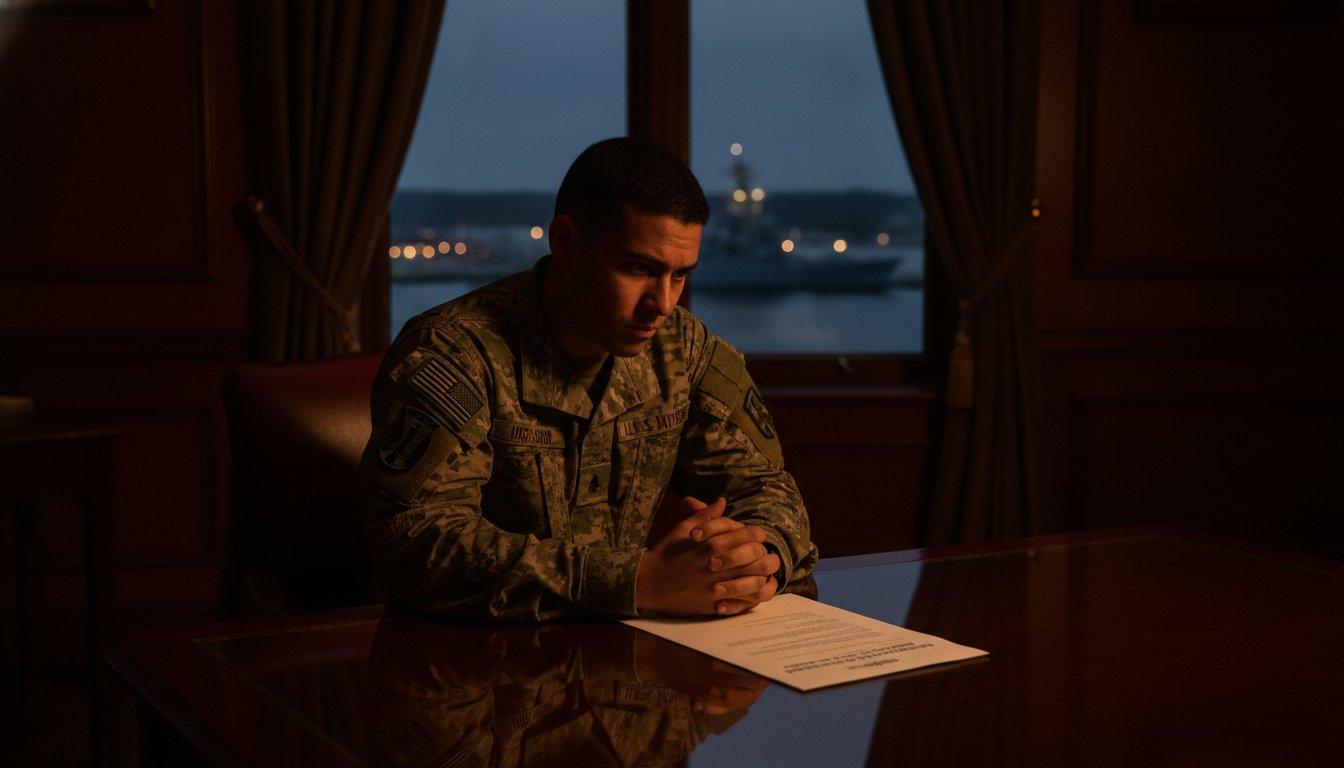
The moment you are pulled into a commander’s office and told you are under investigation, your identity as a dedicated service member must take a backseat to your status as a defendant. You have spent your career following orders and trusting the chain of command, so the instinct to cooperate and explain your side feels natural. You likely feel immense pressure to talk, especially when leadership suggests that being transparent is the fastest way to clear your name. We understand that the fear of immediate confinement or a ruined reputation is paralyzing, but your silence is currently your most powerful tactical advantage.
Knowing exactly in a UCMJ investigation what to do can mean the difference between a dismissed allegation and a life-altering court-martial. This mission-critical guide serves as your strategic survival manual, designed to help you navigate the high-stakes environment of military justice with discipline. We will provide a clear roadmap through the investigation timeline, explain the 2026 updates regarding the Office of the Special Trial Counsel, and clarify your vital rights under Article 31. You will learn how to resist command pressure, avoid the trap of self-incrimination, and find a battle-tested civilian military lawyer who can mount an unflinching defense on your behalf.
Key Takeaways
- Maintain absolute silence regarding any allegations and immediately request credentials from investigators such as CID, NCIS, or OSI.
- Recognize that Article 31(b) offers more robust protections than civilian Miranda rights, including the mandatory advisement of rights before any questioning.
- Utilize a strategic checklist to determine in a UCMJ investigation what to do to secure your legal position and avoid common procedural traps.
- Protect your privacy by refusing consent to searches of your barracks, vehicle, or home without a valid warrant or military authorization.
- Secure a battle-tested civilian military lawyer who speaks the language of the JAG corps to act as a force multiplier for your defense.

Call For A Consultation
(860) 333-6455Table of Contents
- The First Wave: Immediate Response Checklist for UCMJ Investigations
- Understanding Your Shield: Article 31(b) Rights and Legal Protections
- Know Your Adversary: CID, NCIS, OSI, and Command Investigations
- Strategic 'Don'ts': Avoiding Common Self-Sabotage Pitfalls
- Securing Your Defense: The Mission Focus Legal Group Advantage
The First Wave: Immediate Response Checklist for UCMJ Investigations
When you are first approached by investigators or your command, your heart rate will likely spike. This is a physiological reaction to a high-stakes threat. In these opening minutes, your career and your freedom are on the line, and the decisions you make will echo through the rest of your legal proceedings. Knowing exactly in a UCMJ investigation what to do starts with a single, non-negotiable directive: stop talking. While your training tells you to be helpful and transparent, investigators are trained to build cases, not to clear your name. Silence is not an admission of guilt; it is a tactical necessity.
Follow this immediate response checklist to stabilize your situation:
- Maintain absolute silence: Do not explain, do not justify, and do not defend yourself. Even a “casual” conversation can be used against you.
- Identify the investigators: Request to see the credentials of anyone questioning you. Determine if they are from the Army Criminal Investigation Division (CID), Naval Criminal Investigative Service (NCIS), or the Office of Special Investigations (OSI).
- Establish your status: Ask the investigators explicitly, “Am I a suspect or a witness?” If they won’t give you a straight answer, assume you’re a suspect.
- Withdraw from the environment: Politely decline to answer any questions without an attorney present and remove yourself from the area immediately.
Determining Your Suspect Status
Investigators often blur the line between a witness and a suspect to keep you talking. They might suggest they just want “your side of the story” to help “clear things up.” This is a trap. Even informal chats with your Chief, First Sergeant, or NCO can be documented and used as evidence. Under the Uniform Code of Military Justice, a suspect is any individual whom an investigator reasonably believes has committed an offense and who must be advised of their rights before any interrogation begins. If you feel the conversation shifting toward your conduct, invoke your right to counsel immediately.
Securing Your Digital Footprint
Your digital life is a goldmine for investigators. You must immediately stop discussing the case on Discord, Signal, WhatsApp, or any social media platforms. Even encrypted messages can be recovered or screenshotted by others. If an investigator asks to see your personal phone, do not hand it over. They will often use high-pressure “consent to search” requests to bypass the need for a warrant. Instead, focus on documenting the contact. Write down the time, the location, and the names of everyone involved in the initial encounter while the details are still fresh in your mind. This log will be a vital asset for your defense team later.

Call For A Consultation
(860) 333-6455Understanding Your Shield: Article 31(b) Rights and Legal Protections
Your most effective weapon in a military legal battle isn’t found in an armory; it is codified in Article 31 of the Uniform Code of Military Justice. While most civilians are familiar with Miranda rights, service members enjoy protections that are actually more robust. When you are deciding in a UCMJ investigation what to do, you must realize that Article 31(b) triggers much earlier than Miranda. In the civilian world, police generally only read your rights during a custodial interrogation. In the military, any person subject to the UCMJ who is questioning a suspect must advise them of their rights immediately, regardless of whether they are “under arrest” or simply sitting in an office.
A critical component of this advisement is the “Nature of the Accusation.” Investigators cannot simply start a fishing expedition. They are legally required to inform you exactly what you are suspected of doing before they ask a single question. This clarity allows you to understand the gravity of the situation. Whether you are dealing with CID, NCIS, OSI, and Command Investigations, the rules remain the same. You have the right to remain silent, and you have the right to seek counsel. While the military provides defense attorneys, you also have the right to hire a civilian lawyer at your own expense to ensure your interests are protected by an independent advocate.
The Right to Remain Silent
Many service members fear that staying silent makes them look guilty. This is a dangerous misconception. Invoking your right to silence is a professional, disciplined move that prevents you from providing the prosecution with the very evidence they need to convict you. “Clearing the air” is a tactical error that almost always backfires. Your command might act frustrated, but they cannot legally punish you for exercising a constitutional and UCMJ-protected right. Silence isn’t about hiding the truth; it’s about forcing the government to meet its burden of proof without your help.
The Right to Counsel
You are entitled to a military-appointed lawyer from the Trial Defense Service (TDS) or Area Defense Counsel (ADC). These attorneys are often capable, but they are frequently overloaded with high caseloads and limited resources. In high-stakes cases, a military defense attorney Connecticut offers a level of dedicated, persistent advocacy that a busy military lawyer simply cannot match. A civilian attorney with a JAG background provides a layer of protection that is uncoupled from the military chain of command. If you are facing a serious inquiry, you can contact a strategic defense partner to ensure your career remains on track.

Call For A Consultation
(860) 333-6455Know Your Adversary: CID, NCIS, OSI, and Command Investigations
To defend your career effectively, you must identify exactly who is arrayed against you. The military justice system utilizes several distinct investigative bodies, each with its own culture, tactics, and objectives. Knowing in a UCMJ investigation what to do requires identifying which agency is knocking on your door. Federal agents from the Naval Criminal Investigative Service (NCIS), the Army Criminal Investigation Division (CID), or the Air Force Office of Special Investigations (OSI) are professional criminal investigators. They are not your friends. They are not part of your unit. Their sole mission is to gather evidence that supports a “founded” or “probable cause” determination against you.
Beyond these federal agencies, you may face a Command-Directed Investigation (CDI) or an Army 15-6 investigation. These inquiries are often led by an officer from within your own command who may lack formal legal training but possesses the power to recommend career-ending actions. The procedural path of your case often hinges on these initial reports. A criminal investigation usually points toward a court-martial, while a CDI might lead to an Article 15 (Non-Judicial Punishment) or administrative actions. Additionally, the Inspector General (IG) may conduct investigations into waste, fraud, or abuse, which carry their own unique procedural rules and can quickly pivot into criminal territory if misconduct is uncovered.
Law Enforcement Tactics to Watch For
Agents are masters of psychological pressure. They often employ a “rapport building” phase where they ask about your hometown, your family, or your service record. This is a calculated attempt to lower your guard before the real questioning begins. You might also encounter the “Good Cop/Bad Cop” routine, where one agent appears sympathetic to your situation while the other remains aggressive. Do not be fooled by false claims of evidence. It is legally permissible for investigators to lie and tell you they already have your DNA, witness statements, or incriminating text messages to bait you into a confession. Stick to your silence.
Command-Level Inquiries (CDIs and Line of Duty)
Never underestimate the danger of a CDI. While these feel less formal than an NCIS interrogation, they are often the precursor to Administrative Separation (ADSEP). Even if the evidence isn’t strong enough for a court-martial, a command-led inquiry can still result in an “Other Than Honorable” discharge, stripping you of your GI Bill and veteran benefits. These “fact-finding” missions are frequently used to build a case for your removal from service. If you are approached by an investigating officer for a statement, remember that the same Article 31 protections apply. You have the right to remain silent and the right to consult with a battle-tested legal ally before providing any information.
Strategic ‘Don’ts’: Avoiding Common Self-Sabotage Pitfalls
Most service members are natural problem solvers. When a crisis hits, your instinct is to lean in, take charge, and fix the situation through direct action. In a military legal battle, this proactive instinct is often your greatest liability. Successful defense requires a disciplined shift in mindset where you recognize that certain actions, however well-intentioned, can provide the prosecution with the exact ammunition they need to dismantle your career. When considering in a UCMJ investigation what to do, your first priority is to avoid the common traps that lead to self-sabotage.
Adhere to these non-negotiable prohibitions to keep your defense viable:
- Do NOT consent to a search: Whether it is your barracks room, your POV, or your off-base house, never sign a consent form. Force the investigators to obtain a search authorization from a military magistrate or a warrant from a judge.
- Do NOT contact the accuser or witnesses: Any attempt to “talk it out” or “get the story straight” will be characterized as witness intimidation or obstruction of justice.
- Do NOT sign anything: This includes waivers, “cleansing” statements, or summaries of your “informal” remarks. If you haven’t reviewed it with your attorney, don’t put your name on it.
- Do NOT discuss the case with your peers: Your friends can be subpoenaed and forced to testify against you. The only person who cannot be compelled to testify about your conversations is your legal counsel.
The Danger of Article 107
Lying to a military investigator isn’t just a mistake; it’s a separate felony-level offense under Article 107 of the UCMJ. You might believe in the “Exculpatory No” myth—the idea that simply denying your guilt cannot be charged as a lie. This protection no longer exists in military law. If you make a statement that is proven false, the government will add a False Official Statement charge to your case, which is often easier to prove than the original allegation. A conviction under Article 107 can result in a dishonorable discharge and federal prison time, regardless of whether you are found innocent of the primary charge.
Witness Tampering and Obstruction
Investigators closely monitor your interactions following the start of an inquiry. Even a seemingly innocent text to a friend to “see how they’re doing” can be interpreted as an attempt to influence their testimony. If a Military Protective Order (MPO) is issued, any contact—direct or indirect—is a violation that can lead to immediate pretrial confinement. You must also be cautious when speaking with family members. While conversations with a spouse are generally privileged, that privilege has significant exceptions in cases involving domestic issues or children. To navigate these minefields without compromising your future, you should consult with a criminal defense representation expert who understands the nuances of military evidence and procedure.
Securing Your Defense: The Mission Focus Legal Group Advantage
Your defense shouldn’t be left to chance or an overworked military attorney with a massive caseload. While military defense counsel are often dedicated officers, they are frequently constrained by the inherent limitations of the military hierarchy and limited resources. When you are deciding in a UCMJ investigation what to do, the most critical step is securing a force multiplier. A civilian attorney with a JAG background provides independent, persistent advocacy that is entirely uncoupled from the chain of command. This independence allows for a level of aggressive litigation and thorough investigation that military lawyers simply cannot always provide.
Attorney Keith Anthony brings a unique perspective to your defense as a former JAG and a current Marine Corps Reserve Major. He understands the military language, the specific pressures of the command structure, and the nuances of the military justice system. With over 10 years of service in Connecticut, he provides the strategic stability you need when your career is under fire. His experience allows the firm to move beyond the reactive “wait and see” approach, shifting instead to a proactive posture that challenges the government’s evidence at every turn.
Local Advocacy for NSB New London Service Members
Service members stationed at the Groton Sub Base or serving in the Coast Guard in New London face a unique legal climate. We understand the local dynamics of NSB New London and the specific career implications for different ratings and MOS requirements. Having an attorney who can meet you in Groton or New Haven provides a logistical and strategic advantage. We don’t just see a case file; we see a sailor or marine whose honor and future are at stake. Our local presence ensures that we can respond rapidly to developments in your investigation, providing a steady, accessible partner in a complex legal landscape.
Taking Control of the Mission
A proactive defense often requires resources that the military may not provide, such as private investigators and forensic experts. We utilize these assets to uncover facts that CID, NCIS, or OSI may have overlooked or ignored. By building a comprehensive defense from the ground up, we ensure that you are not just a passive observer of your own legal fate. You now have a clearer understanding of UCMJ investigation what to do to protect your future, and the next step is to secure an unflinching advocate. To protect your honor and your career, Contact Mission Focus Legal Group for a confidential UCMJ case review today.
Take Command of Your Military Legal Defense
Facing a military inquiry is one of the most high-stakes challenges of your career. You’ve learned that survival depends on absolute silence, a deep understanding of your Article 31(b) rights, and the discipline to avoid the self-sabotage of informal chats or unverified statements. This guide has outlined for a UCMJ investigation what to do, but the most effective action you can take is to secure an independent advocate who isn’t afraid to challenge the chain of command. Your honor, your benefits, and your freedom are too valuable to leave to an overloaded system.
Attorney Keith Anthony brings the tactical precision of a U.S. Marine Corps Reserve Major and the inside knowledge of a former JAG officer to every case. For over 10 years, he’s provided battle-tested defense for service members in Groton and New Haven. Whether you’re stationed at NSB New London or elsewhere in Connecticut, you deserve a legal partner who speaks the military’s language and understands the gravity of your mission. Secure Your Career: Schedule a Strategic UCMJ Consultation with Attorney Keith Anthony. You’ve spent your life protecting others; now it’s time to let a professional protector defend you.
Frequently Asked Questions
Can my Commanding Officer force me to answer questions during a UCMJ investigation?
No, your Commanding Officer cannot legally compel you to answer incriminating questions. Under Article 31, you have an absolute right to remain silent. Any order that forces you to provide evidence against yourself is unlawful and unenforceable. If your command pressures you to “be a professional” and talk, you must firmly but respectfully state that you are exercising your right to counsel.
What is the difference between a suspect and a witness in a military investigation?
A suspect is someone investigators believe committed an offense, while a witness is someone believed to have relevant information. Suspects must receive a rights advisement before questioning begins. However, investigators often treat suspects like witnesses to bypass these protections. If the questions focus on your actions, assume you are a suspect and stop talking immediately.
Should I wait for a military-appointed lawyer before talking to NCIS or CID?
You should absolutely wait for legal counsel before engaging with NCIS or CID. These agents are trained to elicit confessions through rapport and pressure. Talking before you have a battle-tested lawyer by your side is a critical error. While you wait for a military-appointed attorney, consider consulting a civilian expert to start building your defense immediately.
Will invoking my right to remain silent make me look guilty to my command?
Invoking your rights may frustrate your command, but it is the only way to protect your future. Many service members worry about appearances, yet the most important thing is the evidence on record. Silence prevents the government from using your own words to convict you. A disciplined commander will eventually respect a service member who understands and utilizes the law.
Can I be confined to the barracks or a brig during a UCMJ investigation?
Yes, pretrial confinement is a reality in the military justice system. Command can place you in the brig or restrict you to the barracks if they believe you are a flight risk or a threat to the mission. This is often a high-pressure tactic used during a UCMJ investigation what to do situation to break your resolve. Immediate legal intervention is required to challenge such restrictions.
What happens if I accidentally made a statement to investigators already?
If you have already made a statement, stop all further communication with investigators and command immediately. Your lawyer can analyze the circumstances of that statement to see if your rights were violated. We may be able to suppress that evidence if investigators failed to provide a proper rights advisement or used coercive tactics. Every minute you continue talking makes the damage harder to repair.
How long does a typical UCMJ investigation take to complete?
The duration of an investigation depends on the complexity of the allegations and the agency involved. Command-directed inquiries might conclude in a few weeks, while major investigations by NCIS or CID can last six months to over a year. This period of uncertainty is grueling, but it provides your defense team time to conduct an independent investigation and gather favorable evidence.
Do I need a civilian military lawyer if I’m only facing an Article 15?
You should strongly consider civilian representation even for an Article 15. While it is “non-judicial,” the consequences of a guilty finding can include reduced rank, forfeited pay, and a permanent mark on your record that halts your career. A civilian lawyer ensures you understand the strength of the government’s case before you decide whether to accept the punishment or demand a court-martial.
Call For A Consultation
(860) 333-6455