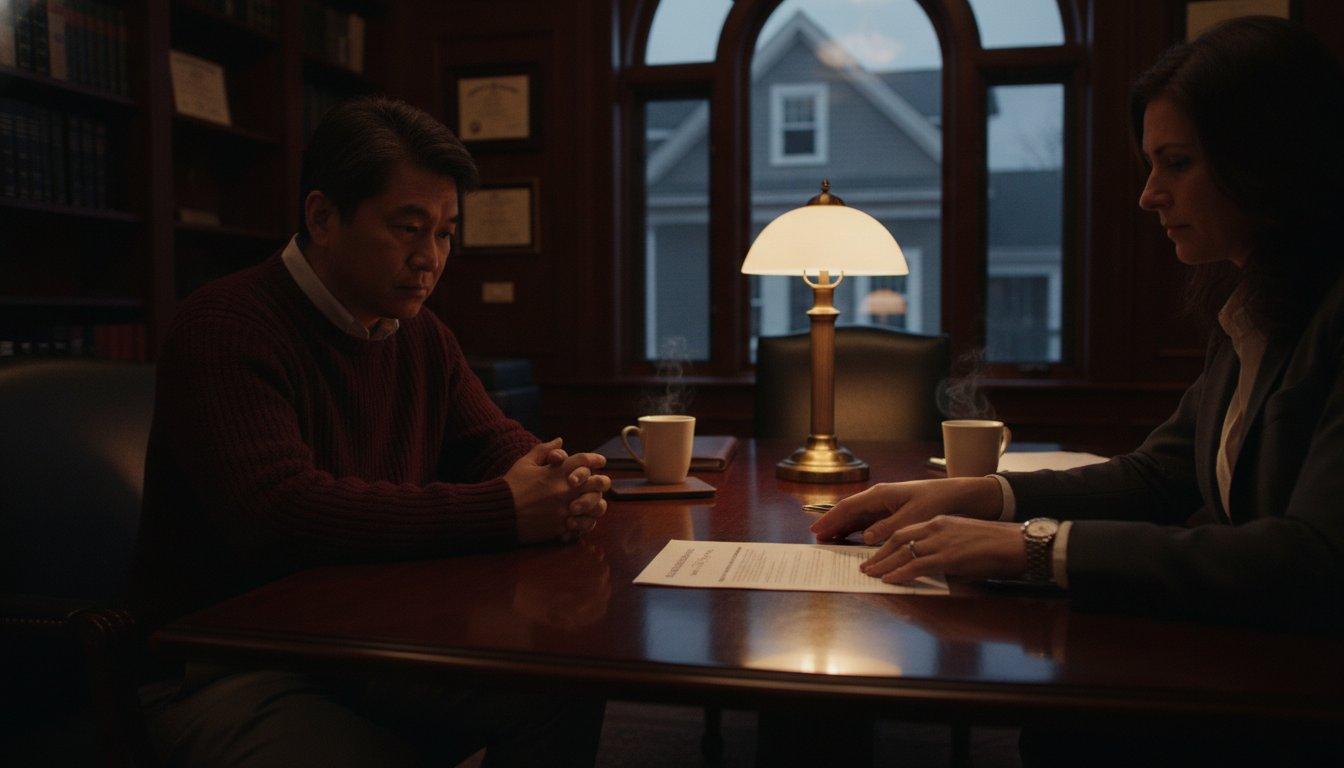
What if the five-day notice you just received from your child’s school isn’t just a meeting, but a high-stakes legal hearing that could permanently alter their academic trajectory? For many parents, the realization that their child’s future hangs in the balance of a board of education vote is paralyzing. You feel intimidated by administrators and confused by the “due process” rules that often seem to favor the institution. This is where a school disciplinary hearing lawyer CT becomes your most vital ally. We understand the weight of this moment. It’s a battle for your child’s reputation, and you shouldn’t have to walk into that room alone or unprepared.
You deserve a strategic, mission-focused plan to navigate the complexities of Connecticut education law. Whether you’re dealing with a sudden expulsion notice or a manifestation determination for a student with an IEP, the stakes are too high for guesswork. In this guide, we’ll break down the specific steps you must take to protect your child’s rights. You’ll learn how to secure a postponement to find counsel, what to expect from the hearing officer, and how to challenge the evidence presented against your student. We’re here to turn your vulnerability into a position of informed strength.
Key Takeaways
- Identify the critical legal distinctions between suspensions and expulsions to understand the specific “due process” rights your child is entitled to under Connecticut law.
- Master the 24-48 hour window following a notice of hearing by securing a postponement and organizing a strategic defense before meeting with administrators.
- Leverage federal protections under IDEA, Section 504, and Title IX to ensure students with disabilities or those facing harassment receive a fair and lawful manifestation determination.
- Avoid the irreversible mistake of allowing your student to sign a confession or “statement of facts” without first consulting a school disciplinary hearing lawyer CT.
- Apply a mission-focused approach to your child’s case, treating the administrative hearing as a high-stakes legal proceeding where thorough preparation dictates the final vote.

Call For A Consultation
(860) 333-6455Table of Contents
- Understanding the School Disciplinary Landscape in Connecticut
- How to Navigate the CT School Disciplinary Process: A Step-by-Step Guide
- Student Rights and Protections: IEPs, 504 Plans, and Title IX
- Critical Mistakes Parents Make During School Disciplinary Hearings
- Mission-Focused Advocacy: Why Mission Focus Legal Group is Different
Understanding the School Disciplinary Landscape in Connecticut
A school disciplinary hearing is not a casual parent-teacher conference. It is a formal administrative proceeding with the power to derail a student’s future. In Connecticut, the disciplinary landscape is divided into three distinct tiers: in-school suspension, out-of-school suspension, and expulsion. While a suspension is a temporary setback, an expulsion is the “nuclear option.” It can remove a student from the classroom for up to 180 school days. The impact doesn’t end when the student returns to class. These marks on a permanent record are visible to college admissions officers and future employers. This is why securing a school disciplinary hearing lawyer CT is a strategic necessity rather than a luxury. You are not just hiring a representative; you are deploying a disciplined protector to safeguard your child’s academic mission.
The broader concept of School discipline encompasses everything from classroom management to formal expulsion, but once the process moves toward a hearing, the environment becomes adversarial. The school board is represented by counsel, and the administration has already spent days or weeks building their case. Without a strategic plan, you are walking into a high-stakes environment where the rules of engagement are heavily weighted against the student.
The Legal Basis for Student Discipline in CT
Connecticut General Statutes Section 10-233c and 10-233d establish the strict boundaries for student punishment. Public school students are protected by the 14th Amendment, which guarantees “due process” before they are deprived of their right to an education. This includes the right to a formal notice and a hearing before an impartial officer. It’s also vital to realize that a school’s jurisdiction isn’t limited to the physical campus. If a student’s off-campus behavior is deemed “seriously disruptive of the educational process,” the board can still pursue expulsion. Private school students face a different landscape, as their rights are usually dictated by the specific terms of their enrollment contract rather than constitutional mandates.
Why ‘Just Talking to the Principal’ Can Be a Tactical Error
Walking into a principal’s office without a plan is a tactical failure. Many parents think they can resolve matters through a simple conversation. Unfortunately, administrators are often focused on building a case. Any statement your child makes can be used as evidence in a formal hearing. You might inadvertently waive critical rights before you even realize a hearing is being scheduled. A school disciplinary hearing lawyer CT serves as an essential buffer. We manage the flow of information and ensure that your family isn’t pressured into signing “statements of facts” that are essentially confessions. Our presence changes the dynamic from a one-sided interrogation to a balanced, strategic defense.

Call For A Consultation
(860) 333-6455How to Navigate the CT School Disciplinary Process: A Step-by-Step Guide
Speed is your greatest ally when the school administration initiates a disciplinary action. The process moves with a swift, bureaucratic momentum that can leave families reeling. From the moment an incident report is filed, the school begins building a case. The 24-48 hours following the receipt of a notice of hearing are the most critical for your defense. This is the reconnaissance phase where a school disciplinary hearing lawyer CT identifies the school’s strategy and prepares a counter-mission. The timeline typically moves from a formal investigation to a written notice, culminating in a hearing before either an impartial hearing officer or the local Board of Education. Understanding this sequence allows you to transition from a state of reactive fear to proactive strength.
Step 1: Analyzing the Notice of Hearing
The notice you receive is a legal document, not a suggestion. Per Connecticut law, this notice must include the time and place of the hearing, a clear statement of the charges, and the specific board policies allegedly violated. It must also outline the proposed sanctions, such as an expulsion that could last a full calendar year. You must immediately request the student’s complete educational record. This includes every email, disciplinary log, and witness statement the school intends to use. Reviewing these documents allows us to spot procedural errors or biased reporting before the hearing begins.
Step 2: Strategic Evidence Gathering and Witness Prep
Effective defense requires more than just a denial of the charges. We focus on gathering character references from coaches, community leaders, and tutors to demonstrate that the incident is an outlier in an otherwise positive academic career. Identifying witnesses who are not school employees is vital, as they provide an independent perspective free from administrative influence. Exculpatory evidence in a school context refers to any information, digital data, or testimony that tends to justify the student’s actions or proves they did not commit the alleged violation. Organizing this evidence into a logical, persuasive narrative is how we protect your child’s reputation.
Step 3: Execution at the Hearing
The hearing is a formal proceeding where conduct and presentation matter. We advise a “military discipline” approach: arrive early, dress professionally, and maintain a calm, respectful demeanor. This projects an aura of serious intent. During the hearing, cross-examining school administrators is a tactical necessity to expose gaps in their investigation. The goal is to present a compelling closing argument that offers a viable alternative to expulsion. If you are facing an upcoming hearing, securing education law representation early provides the tactical advantage needed to navigate this complex process and secure a favorable outcome for your child’s future.

Call For A Consultation
(860) 333-6455Student Rights and Protections: IEPs, 504 Plans, and Title IX
Federal and state laws provide a robust shield for students, but these protections only work if they are aggressively enforced. For students with disabilities, the law creates a specific tactical advantage that school boards cannot ignore. A school disciplinary hearing lawyer CT ensures these legal safeguards aren’t bypassed by administrators eager for a quick resolution. Whether your child has an Individualized Education Program (IEP) or a 504 Plan, their rights are governed by the Individuals with Disabilities Education Act (IDEA) and Section 504 of the Rehabilitation Act. These statutes require the school to follow a precise, mission-driven protocol before they can impose significant disciplinary changes.
The Manifestation Determination Review (MDR)
The MDR is the most critical defensive line for a student with a disability. If a school seeks to change a student’s placement for more than 10 consecutive school days, they must first hold this meeting. The objective is to answer two specific questions. Was the behavior caused by, or did it have a direct relationship to, the student’s disability? Or was the behavior a direct result of the school’s failure to implement the student’s IEP? If the answer to either is “yes,” the student generally cannot be expelled. We provide the disciplined advocacy needed to ensure the school’s “experts” don’t minimize the impact of a student’s disability during this high-stakes evaluation.
Title IX and Sexual Misconduct Allegations
Cases involving allegations of sexual harassment or assault fall under the complex jurisdiction of Title IX. These proceedings are uniquely dangerous because they often utilize a “preponderance of the evidence” standard, which is much lower than the “beyond a reasonable doubt” standard used in courtrooms. A finding of responsibility can lead to immediate removal from the school community and permanent damage to a student’s future. There is also a significant risk of parallel criminal investigations. Because these scenarios frequently overlap with the judicial system, having an ally with extensive experience in criminal defense is a vital necessity. We protect the student’s rights while ensuring that confidentiality is maintained throughout the process.
In Connecticut, you also have the right to request an impartial hearing officer. This is often a strategic pivot that moves the decision-making power away from a local board of education that may be influenced by community pressure. If the hearing results in an unfavorable outcome, the mission continues. You have the legal right to appeal a Board of Education decision to the Connecticut Superior Court. This requires a precise, methodical approach to administrative law. Every phase of this process demands a school disciplinary hearing lawyer CT who approaches the defense of your child with the thoroughness of a military operation.
Critical Mistakes Parents Make During School Disciplinary Hearings
Treating an expulsion hearing as a minor school matter is a tactical error that often leads to a permanent stain on a student’s record. Many parents believe that if they are polite and cooperative, the school will “do the right thing” and show leniency. This assumption ignores the reality that the school district is acting as both prosecutor and judge. By the time you receive a formal notice, the administration has already determined their desired outcome and built a case to support it. Failing to engage a school disciplinary hearing lawyer CT early in the process leaves your child vulnerable to aggressive questioning and procedural traps designed to secure a conviction rather than a fair resolution.
The Confession Trap
Administrators often utilize interrogation techniques that would be heavily scrutinized in a criminal court. They may pull a student out of class, isolate them in an office, and pressure them to write a “statement of facts” before you are even notified of the incident. These statements are rarely neutral; they are confessions that the school will use to bypass a thorough investigation. You must instruct your child that if they are questioned regarding a serious incident, they should remain respectful but decline to provide any written or oral statement until you are present. In Connecticut administrative proceedings, student statements obtained without a parent or attorney present are widely admissible as evidence, and a signed confession often becomes the insurmountable centerpiece of the school’s case for expulsion. Once that ink is dry, your defensive options are severely limited.
Ignoring the Student Handbook
The Student Handbook is more than a list of rules; it’s the operational manual that governs the district’s authority over your child. Parents often waste time arguing about “fairness” or “common sense” instead of focusing on the specific language of the board policy. If the school failed to follow the exact disciplinary steps or notification timelines outlined in their own handbook, they’ve committed a procedural breach. We use these failures to challenge the severity of the proposed punishment. For instance, if the handbook mandates a tiered intervention strategy that the school skipped, we have the leverage to argue for a reduction in sanctions. Precision in identifying these procedural gaps is how we shift the momentum of the hearing.
Missing deadlines is another common point of failure that can end a defense before it starts. You typically have a narrow window, often just five business days, to prepare for a hearing or a limited time to file an appeal after a decision is rendered. If you’ve received a notice of hearing, don’t wait for the situation to escalate further. You need a disciplined advocate to review the evidence and build a counter-mission immediately. Contact Mission Focus Legal Group to secure the professional representation your child’s future demands.
Mission-Focused Advocacy: Why Mission Focus Legal Group is Different
Mission Focus Legal Group operates on a foundation of strategic precision and service. Keith Anthony, a former Judge Advocate and current USMC Reserve Major, brings a level of discipline to education law that few firms can replicate. This background is not just a credential; it is a methodology. When school board members or administrators attempt to use their authority to intimidate a family, we provide a stable and unflinching presence. As your school disciplinary hearing lawyer CT, we approach the defense of your child with the same thoroughness used in high-stakes military litigation. We ensure that every procedural error by the school is identified and every legal protection is fully utilized.
Our approach is rooted in the belief that every student deserves a disciplined protector. We don’t just react to the school’s allegations. We conduct our own reconnaissance, gather our own evidence, and build a narrative that puts the student’s future first. While the school board focuses on policy and punishment, we focus on the human being at the center of the crisis. This balance of military-grade discipline and compassionate advocacy allows us to navigate the most hostile administrative environments with a steady, calming influence.
Strategic Defense for Military Families in Connecticut
Connecticut’s military community, especially those families stationed at the Groton Sub Base, faces unique pressures when school discipline occurs. For these families, a mark on a permanent record can have consequences far beyond the classroom. It can derail a student’s future military service or lead to the loss of a hard-earned ROTC scholarship. Our firm understands these specific stakes. We leverage the Interstate Compact on Educational Opportunity for Military Children to advocate for students who may be caught in the middle of a relocation or transition. We provide a bridge between the rigid requirements of the military lifestyle and the complex regulations of the Connecticut education system.
Protecting Your Child’s Future with Mission Focus
Our mission is to transform your situation from a state of crisis into a managed strategic defense. We prioritize human connection and transparent communication, ensuring you are never left wondering about the status of your child’s case. Beyond the hearing itself, we focus on securing Alternative Educational Opportunities. These programs are vital to prevent the learning gaps that occur when a student is excluded from the traditional classroom environment. If you are searching for an education law attorney Connecticut who combines tactical expertise with genuine empathy, Mission Focus Legal Group is your ally. We stand ready to protect your child’s academic future with persistence and unflinching advocacy.
Secure Your Child’s Academic Mission
The window of opportunity to protect your child’s education is narrow. The first 48 hours after receiving a notice are critical for gathering evidence and identifying procedural failures in the school’s investigation. Whether you’re navigating a manifestation determination for a student with an IEP or challenging a Title IX allegation, you shouldn’t rely on the district to protect your family’s interests. A school disciplinary hearing lawyer CT provides the tactical advantage needed to move from a state of vulnerability to a position of informed strength. Our firm, led by U.S. Marine Corps Reserve Major Keith Anthony, brings a level of strategic, mission-driven advocacy that is designed to withstand the pressure of a Board of Education hearing.
You don’t have to carry this burden alone. We are dedicated to providing the stable, authoritative presence your child needs during this crisis. Protect your student’s future—contact Mission Focus Legal Group today. By taking decisive action now, you can ensure that a single mistake or misunderstanding doesn’t define your child’s entire academic trajectory. There is a path forward, and we’re ready to help you find it.
Frequently Asked Questions
Can a school expel my child without a hearing in Connecticut?
No, Connecticut law strictly prohibits a school from expelling a student without a formal hearing. The Board of Education must provide you with a written notice at least five business days before the scheduled date. This notice has to include the specific charges and the evidence against your child. You also have the legal right to request a postponement of up to one week to secure legal counsel; ensuring you don’t walk into the room unprepared.
Do I have the right to bring a lawyer to a school disciplinary meeting?
Yes, you have a clear legal right to be represented by an attorney during any formal expulsion hearing in Connecticut. While informal suspension meetings might not always require counsel, having a school disciplinary hearing lawyer CT present for formal proceedings is a strategic necessity. An attorney ensures that the school board follows all administrative rules and protects your child from self-incrimination during questioning.
What is the difference between a suspension and an expulsion in CT?
The primary differences are the duration of the punishment and the level of due process required. A suspension is a temporary removal from school for up to 10 consecutive days, which usually only requires an informal meeting. An expulsion is a much more severe “nuclear option” that can last up to 180 school days. Because the stakes are higher, expulsions require a formal hearing before an impartial officer or the Board of Education.
Can school disciplinary records be removed or expunged later?
Yes, Connecticut statutes allow for the expungement of an expulsion from a student’s cumulative record under specific circumstances. If a student graduates from high school or meets certain behavioral criteria, the board may vote to remove the notice of expulsion. We often negotiate these expungement terms as part of a strategic defense to ensure the incident doesn’t follow your child into college or future employment.
What happens if law enforcement is involved in the school incident?
Parallel investigations will occur, which creates a high-stakes environment where administrative statements can impact criminal proceedings. Anything your child tells a principal can potentially be shared with the police and used as evidence in court. In these cases, it’s vital to have an advocate who understands both education law and criminal defense to manage the flow of information and protect your child’s constitutional rights.
How long does a typical school disciplinary hearing last?
Most hearings are completed within two to four hours, though complex cases involving multiple witnesses can extend longer. The duration depends on the volume of evidence the school presents and the depth of cross-examination we perform. Our goal is to move through the process with disciplined efficiency while ensuring every piece of exculpatory evidence is thoroughly presented to the board.
Can my child attend a different school during an expulsion period?
Generally, other public school districts in Connecticut are not required to enroll a student who is currently serving an expulsion. However, as of July 1, 2026, school districts are required to offer an alternative educational opportunity to students between the ages of 16 and 18 who are expelled for the first or second time. This ensures that your child doesn’t fall behind academically while the disciplinary period is active.
What is a ‘stipulated agreement’ in a school discipline case?
A stipulated agreement is a negotiated settlement between the family and the school district that avoids the need for a formal hearing. A school disciplinary hearing lawyer CT uses this as a tactical tool to secure a guaranteed outcome, such as a reduced expulsion period or a clear path for early readmission. It allows you to maintain control over the situation rather than leaving your child’s future to an unpredictable board vote.

Call For A Consultation
(860) 333-6455